

One of the first questions many new property investors ask is, “Which property should I buy?” It feels like the obvious place to begin. Yet experienced investors often approach the decision from a different angle. Before they compare locations, property types, or expected returns, they spend time thinking about what they want their investment to achieve.
For some people, the priority is generating a steady stream of income that can supplement their salary or provide greater financial security over time. Others are prepared to wait years before seeing meaningful returns because their focus is on building wealth through rising property values. Neither approach is inherently better than the other. The right choice depends on your personal circumstances, your financial objectives, and how you define success.
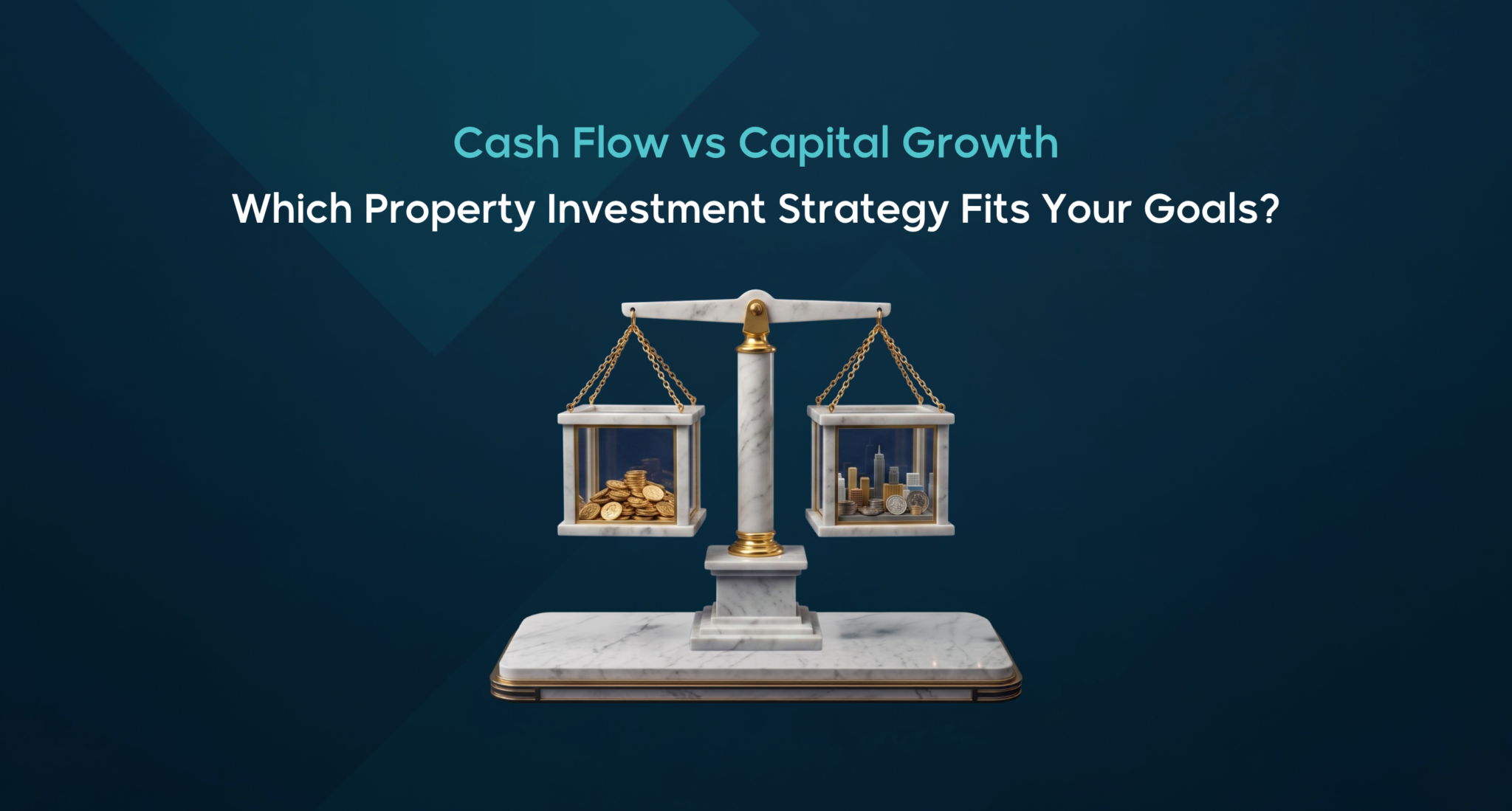
This is where understanding the difference between a cash flow vs capital growth property becomes valuable. Although both strategies involve investing in real estate, they aim to achieve different outcomes and often influence the type of property an investor chooses.
As you build your investment knowledge, recognising the strengths of each approach can help you make decisions that are aligned with your long-term plans rather than following what happens to be popular at the time.
Cash flow and capital growth are two different ways a property can create value
People often talk about property investing as though every investment performs in the same way, but that is rarely the case. Two properties with similar purchase prices can produce very different results depending on where they are located, the demand from tenants, local market conditions, and the investor’s objectives.
A property focused on cash flow is intended to generate regular income. The rental income, after expenses have been considered, provides the investor with ongoing returns while they continue to own the property. For someone looking to create an additional income stream, this consistency may be more valuable than rapid increases in the property’s market value.
A capital growth property works differently. Instead of prioritising immediate income, the expectation is that the property’s value will increase over time. While rental income may still be part of the investment, the larger reward often comes years later if the property appreciates in value.
Imagine two friends beginning their investment journey. Sarah wants to reduce her reliance on a monthly salary and hopes her investments will eventually contribute towards everyday living expenses. David is twenty years away from retirement and is comfortable waiting for his investments to grow in value over time. Although they’re both investing in property, they’re solving different financial challenges. Their ideal investment strategies may look very different, even if both are sensible choices.
Understanding the difference between a cash flow vs capital growth property is less about deciding which strategy is superior and more about recognising which approach supports the future you’re working towards.
How your financial goals shape the right investment strategy
The choice between a cash flow vs capital growth property rarely begins with the property itself. It begins with you.
Every investor has different reasons for entering the property market. Some want to create an additional source of income that supports their lifestyle today, while others are focused on building wealth over many years. There are also investors who hope to achieve a balance between the two. Understanding your priorities before you invest makes it much easier to evaluate opportunities when they arise.
Imagine someone hoping to replace part of their monthly salary within the next five years. An investment that generates consistent rental income may help them move closer to that goal. On the other hand, someone investing for retirement several decades from now may be prepared to accept lower income today if they believe the property’s value has greater potential to grow over time.
Neither investor is making the “right” decision in absolute terms. They’re making the decision that best matches their circumstances.
This is why setting clear financial goals before investing is so important. Without a destination in mind, it becomes easy to compare properties based only on purchase price, location, or what other investors are buying. A property that looks attractive on paper may not actually support the outcome you’re hoping to achieve.
If you haven’t already considered what success looks like for your investments, it can be helpful to start there. In our article on How to Align Real Estate Investments With Your Financial Goals, we explore how defining your objectives can create a stronger foundation for every investment decision you make.
Once your goals are clear, comparing a cash flow vs capital growth property becomes much more meaningful because you’re measuring each opportunity against your own plans rather than someone else’s.
Looking beyond today’s returns
It’s natural to focus on immediate results, especially when you’re making one of the biggest financial decisions of your life. Many investors instinctively ask questions like, “How much rent will this property generate?” or “How much could it be worth in five years?”
While both questions matter, experienced investors rarely rely on a single figure when evaluating an opportunity. Property investing is about understanding how different factors work together over time.
A property that delivers strong rental income today may experience slower price growth in the future. Likewise, a property in an area with significant development and increasing demand may produce more modest rental income while offering greater potential for long-term appreciation.
Neither outcome is guaranteed, and property markets can change over time. Local economic conditions, population growth, infrastructure projects, supply and demand, and interest rates can all influence how an investment performs. That’s why it’s helpful to view property as a long-term journey rather than expecting immediate results.
When comparing a cash flow vs capital growth property, it’s worth asking yourself whether you’re looking for income today, greater wealth tomorrow, or a combination of both. Your answer will shape the type of opportunities you prioritise and the expectations you bring to your investment.
Taking this broader view also encourages better decision-making. Instead of chasing the highest advertised rental yield or assuming every property’s value will increase significantly, you’re considering how each investment contributes to your wider financial picture.
Successful investors often describe property as a marathon rather than a sprint. The properties they choose today are selected because they support where they want to be years from now, not because they promise the quickest return.
Can a property deliver both cash flow and capital growth?
One of the biggest misconceptions in property investing is that every investment has to fall neatly into one category or the other. In reality, the comparison between a cash flow vs capital growth property is rarely black and white.
Many successful investments offer a combination of both. A property may generate reliable rental income while also increasing in value over time. The difference is often in which characteristic takes priority and how that aligns with your financial objectives.
For example, an investor looking for immediate income may be willing to accept slower capital appreciation if the property provides dependable rental returns. Someone with a much longer investment horizon might make the opposite decision, choosing a property in an emerging area where rental income is modest today but there is greater potential for future growth.
The important point is not to chase the “perfect” investment. Every property comes with trade-offs. Understanding those trade-offs helps you make decisions with confidence instead of comparing every opportunity against unrealistic expectations.
This is where doing your research becomes so valuable. Looking beyond headline figures and understanding the broader picture can help you recognise whether a property supports the role you want it to play within your investment strategy.
If you’re evaluating potential opportunities, our articles on How to Evaluate an Investment Property Before You Invest and The Most Important Property Investment Metrics Every Investor Should Know provide practical guidance on assessing investments more effectively.
If you’re new to investing, it’s also worth understanding the broader principles behind capital appreciation and investment returns. Investopedia’s real estate investing resources provide additional background on many of the concepts discussed in this article.
Fractional property ownership can offer greater flexibility
For many people, deciding between a cash flow vs capital growth property becomes more challenging because of budget constraints. Purchasing an entire investment property often requires a significant financial commitment, which can limit the range of opportunities available.
Fractional property ownership offers a different way to approach investing by allowing multiple investors to own shares in an income-generating property. Rather than committing all of your available capital to a single investment, you may be able to spread your investment across different properties, locations, or investment opportunities, depending on your financial goals.
This flexibility can be particularly valuable for investors who are still building their portfolios. Instead of feeling pressured to choose one property that meets every objective, fractional ownership may make it possible to create a more balanced approach over time.
For example, an investor focused on generating income today could choose opportunities designed to provide regular rental returns, while also allocating part of their investment towards properties with stronger long-term growth potential. As their circumstances change, they can continue adjusting their investment strategy to reflect new financial priorities.
At Osool Gamma, our focus is on making real estate investing more accessible while helping investors understand the principles behind successful long-term investing. Fractional ownership is one way investors can participate in the property market, but like any investment approach, it works best when it’s aligned with clearly defined financial goals.
Choosing the strategy that works for you
If there is one lesson experienced investors return to time and time again, it’s that successful investing is rarely about copying someone else’s decisions.
The property that performs well for one investor may be completely unsuitable for another because their goals, timelines, financial circumstances, and tolerance for risk are different. Comparing your investment journey with someone else’s can quickly lead to decisions that feel exciting in the moment but don’t support the future you’re trying to build.
Instead of asking whether a cash flow vs capital growth property is objectively better, try asking a different question.
“What role do I want this investment to play in my life?”
That single question often changes the conversation.
Perhaps you’re looking to generate an additional income stream that supports your family today. Perhaps you’re investing with retirement in mind and are comfortable allowing your investment to grow over many years. Or perhaps you’re aiming for a balance between income and long-term appreciation as your portfolio develops.
Whatever your answer, having a clear purpose gives every investment decision greater direction. It becomes easier to evaluate opportunities, ignore distractions, and remain focused when markets change.
Property investing has always been a long-term endeavour. The investors who tend to achieve their goals are not necessarily those who find the perfect property, but those who consistently make decisions that reflect their own financial objectives.
Conclusion
Choosing between a cash flow vs capital growth property isn’t about deciding which strategy is universally better. It’s about understanding how different types of property investments can help you achieve different financial outcomes.
Some investors prioritise steady rental income because they value regular cash flow and financial stability today. Others are prepared to wait patiently while their property’s value grows over time. Many build portfolios that combine both approaches as their financial circumstances evolve.
Before focusing on market trends or comparing investment opportunities, take the time to understand what you’re working towards. When your investment decisions are guided by clear financial goals, it becomes much easier to recognise opportunities that genuinely support your long-term plans.
Property investing is a journey rather than a single decision. The more clearly you understand where you’re heading, the more confidently you can choose the path that gets you there.
Frequently Asked Questions
Is a cash flow vs capital growth property better for first-time investors?
There isn’t a single answer for every investor. A cash flow vs capital growth property should be chosen based on your financial goals, investment timeline, and whether you value regular rental income or long-term growth.
Can a cash flow vs capital growth property provide both income and growth?
Yes. Some properties can generate rental income while also increasing in value over time. The balance between cash flow and capital growth will depend on factors such as location, demand, and market conditions.
How do I choose between a cash flow vs capital growth property?
Start by defining what you want your investment to achieve. If your goal is regular income, cash flow may be your priority. If you’re investing for the future, capital growth may play a larger role. Many investors aim for a combination of both as their portfolio grows.