


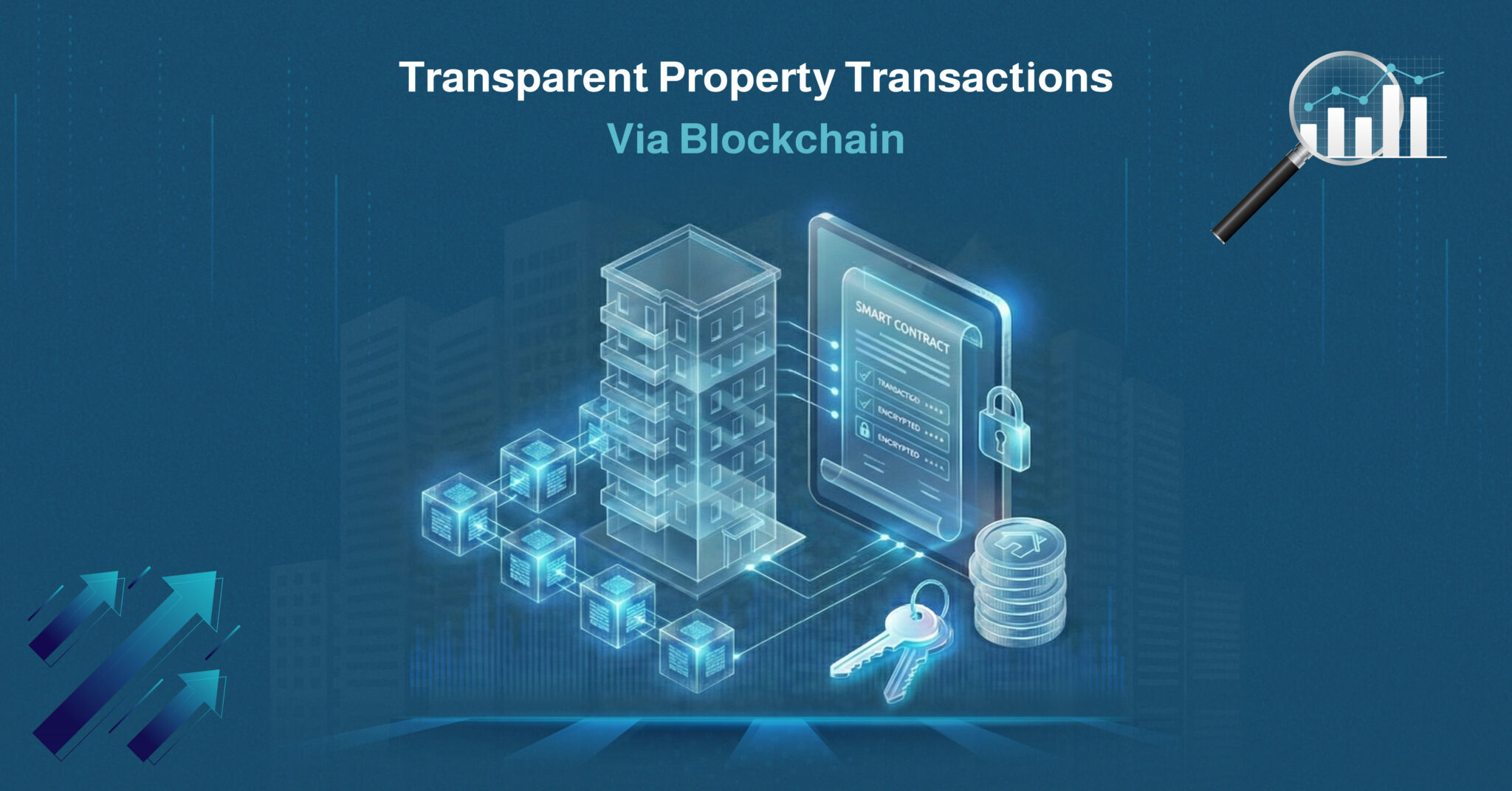
Property transactions have always carried a trust problem. Buyers, sellers, and investors often rely on multiple intermediaries, paper-heavy processes, and records that are difficult to verify in real time. Delays, unclear ownership histories, missing documents, and even fraud are still common issues in many property markets, including parts of the MENA region and beyond.
As more investors demand clarity and accountability, attention has shifted toward digital systems that can offer verifiable records and consistent processes. This is where transparent property transactions via blockchain enter the conversation. Instead of relying on fragmented databases and manual checks, blockchain introduces a shared, tamper-resistant record of ownership and transactions.
In practical terms, transparent property transactions via blockchain mean that property data, ownership changes, and contractual steps can be tracked and verified digitally. This article explains how that works, where the benefits come from, and where the limits still exist.
By the end, readers will understand:
- Why traditional property transactions often lack transparency
- How blockchain improves record visibility and trust
- What smart contracts actually do in property transactions
- Who benefits most from transparent property transactions via blockchain
The focus is on understanding the process, not selling the technology.
Transparent property transactions via blockchain: what this really means
At a basic level, transparent property transactions via blockchain refer to using blockchain as a shared record system for property-related data. This includes ownership history, transaction records, and contractual steps that are visible to permitted participants.
Blockchain does not replace property law or land registries. Instead, it adds a digital layer that records actions clearly and consistently.
What transparency looks like in practice
- Shared records
All approved parties access the same transaction data rather than relying on separate systems. - Time-stamped entries
Every update is recorded with a date and time, creating a clear audit trail. - Reduced manual handling
Fewer paper documents means fewer opportunities for errors or manipulation. - Permission-based access
Sensitive information is visible only to relevant parties, not the public.
Common misunderstandings
It is important to separate reality from assumptions:
- Blockchain does not automatically make transactions instant
- Blockchain does not bypass local property laws
- Blockchain does not remove all risk
What transparent property transactions via blockchain do offer is better visibility and traceability, which helps investors and professionals understand exactly what has happened and when.
How blockchain creates transparency in property ownership and records
Transparency in property ownership depends on accurate, consistent records. Traditional systems often rely on separate databases held by registries, agents, and legal firms. Blockchain addresses this by creating a single source of truth.
How ownership records are handled
Below is a simplified comparison of traditional records versus blockchain-based records:
| Aspect | Traditional System | Blockchain-Based System |
| Record storage | Multiple databases | Shared ledger |
| Update method | Manual submissions | Digital entries |
| Verification | Third-party checks | Network validation |
| Change tracking | Limited visibility | Full history visible |
| Tampering risk | Higher | Lower |
Why this matters for investors
Transparent property transactions via blockchain help investors by:
- Making ownership history easier to verify
- Reducing reliance on informal confirmations
- Improving confidence in transaction accuracy
Blockchain does not decide who owns a property. Legal ownership still depends on recognized authorities. The value lies in recording and displaying information clearly, reducing uncertainty and disputes over records.
Smart contracts and transparent property transactions via blockchain
Smart contracts are one of the most practical tools supporting transparent property transactions via blockchain. They are digital agreements that execute predefined actions once certain conditions are met.
What smart contracts actually do
In property transactions, smart contracts can:
- Confirm that conditions are met
- Trigger payments automatically
- Record transaction milestones
- Reduce manual follow-ups
For example, a smart contract may release funds only once ownership transfer documentation is confirmed.
Example workflow
| Step | Action |
| Agreement signed | Smart contract is activated |
| Conditions met | Verification is logged |
| Payment released | Funds move automatically |
| Record updated | Transaction stored on blockchain |
What smart contracts do not do
- They do not interpret unclear legal language
- They do not replace legal advice
- They do not override regulations
When used correctly, smart contracts improve consistency and reduce processing delays. Within transparent property transactions via blockchain, they support trust by ensuring steps happen as agreed, not by discretion.
Risks, limitations, and regulatory considerations
While transparent property transactions via blockchain improve clarity, they are not without constraints. Investors should understand where the technology helps and where traditional systems still apply.
Key limitations to consider
- Regulatory alignment
Not all jurisdictions fully recognize blockchain records in property transactions. - System integration
Blockchain platforms must still connect with land registries and legal authorities. - Human input risk
Incorrect data entered on-chain remains incorrect, even if immutable. - Adoption gaps
Widespread use depends on cooperation across institutions.
Common risk areas
- Overreliance on technology without legal review
- Assuming blockchain guarantees transaction success
- Misunderstanding platform responsibilities
Transparent property transactions via blockchain reduce risk by improving visibility, but they do not remove legal, market, or operational risk. Transparency supports better decisions, not guaranteed outcomes.
Who benefits most from transparent property transactions via blockchain
Not every participant benefits equally from blockchain-based property systems. Transparent property transactions via blockchain are most useful where trust, verification, and clarity matter most.
Investor and professional profiles
- Cross-border investors
Easier verification of records without physical presence. - Fractional and digital asset investors
Clear tracking of ownership and transaction steps. - Institutions and platforms
Standardized processes improve reporting and compliance. - Risk-aware buyers
Those prioritizing documentation and audit trails.
Platforms such as Gamma Assets use blockchain infrastructure to improve record visibility and investor confidence, particularly in digital and fractional real estate models. The benefit lies in clarity, not speed alone.
Understanding transparent property transactions via blockchain
Transparent property transactions via blockchain improve how property records, ownership changes, and contractual steps are tracked and verified. By creating shared, time-stamped records and supporting automated processes, blockchain adds structure and clarity to transactions that have traditionally lacked both.
The real value comes from verified records, consistent workflows, and reduced reliance on fragmented systems. Smart contracts support accuracy, while transparency helps investors and professionals identify issues earlier.
However, technology does not replace legal frameworks or eliminate risk. Transparent property transactions via blockchain should be adopted with understanding, realistic expectations, and proper regulatory alignment. Used correctly, transparency becomes a tool for trust and better decision-making.
Frequently asked questions about transparent property transactions via blockchain
How do transparent property transactions via blockchain reduce fraud?
They reduce fraud by creating tamper-resistant records and clear ownership histories. Transactions are easier to verify, making unauthorized changes harder to hide.
Are transparent property transactions via blockchain legally recognized?
Recognition depends on local laws. In many cases, blockchain supports records and processes, while legal ownership remains governed by existing property regulations.
Do transparent property transactions via blockchain eliminate the need for intermediaries?
No. Legal advisors, registries, and compliance checks are still required. Blockchain reduces friction but does not remove professional oversight.