


For many people, real estate investing has always been closely tied to the idea of passive income. The appeal is easy to understand. A well-performing property can generate recurring rental income while also increasing in value over time. However, traditional property ownership is not always as passive as it sounds.
Managing tenants, dealing with maintenance issues, overseeing payments, handling vacancies, and coordinating repairs can quickly turn a property investment into something that feels more like a second job.
That is one reason why more investors are paying attention to fractional property ownership.
Instead of purchasing and managing an entire property independently, investors can own shares in income-generating real estate assets alongside other participants. This creates a more accessible way to gain exposure to rental income opportunities without taking on full operational responsibility.
Across Saudi Arabia, interest in shared real estate ownership is growing as investors look for more flexible ways to build wealth, diversify portfolios, and generate recurring income through professionally managed property opportunities.
For income-focused investors in particular, the model is attractive because it combines two things many people want from investing:
- exposure to real estate,
- and a more hands-off investment experience.
This article explores how rental income works through fractional property ownership, how investors may earn returns, the factors that affect income performance, and what Saudi investors should understand before participating in shared real estate opportunities.
Understanding Rental Income in Fractional Property Ownership
At its core, rental income through fractional ownership works similarly to traditional property investing.
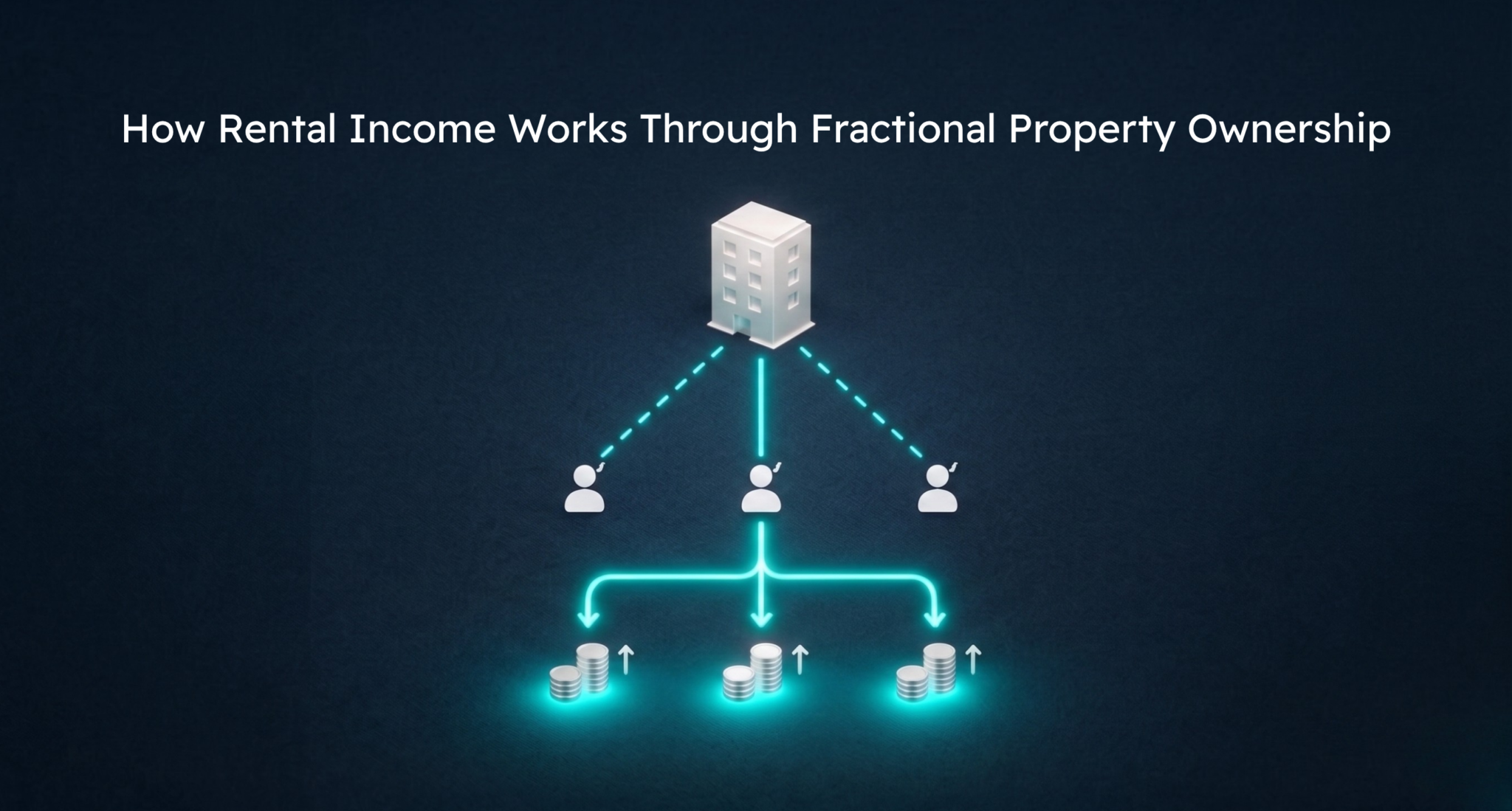
A property generates income through tenants or operational activity, and a portion of that income is distributed to investors based on their ownership participation.
The difference is that investors are participating through shared ownership structures rather than owning the entire property independently.
For example, instead of one investor purchasing and managing an entire apartment building, multiple investors may each own shares linked to the same asset. Rental income generated by the property can then be distributed proportionally based on ownership participation.
For many investors, this creates a more manageable and accessible way to participate in income-generating real estate opportunities.
Why Investors Are Drawn to Passive Property Income
Most people like the idea of rental income until they realise how much work direct property ownership can become.
Managing tenants, dealing with maintenance issues, handling vacancies, and chasing late payments can quickly turn passive income into something far more demanding than expected.
Shared ownership models appeal to investors who still want exposure to property-generated income but prefer a structure that feels more manageable.
That does not make the investment risk-free, but it can reduce some of the operational pressure that comes with owning and managing property independently.
How Rental Distributions Typically Work
Rental distributions depend on both the structure of the investment and the performance of the underlying property.
In simple terms, income generated through tenants or property operations is collected, expenses are deducted, and the remaining income may then be distributed to investors based on ownership participation.
Distributions are often influenced by:
- occupancy levels,
- tenant stability,
- maintenance costs,
- financing structures,
- and overall property performance.
Some opportunities are designed primarily around recurring income, while others focus more heavily on long-term growth, with rental income acting as an additional benefit.
That is why investors should always understand what the property is actually designed to deliver before participating.
Consistency Matters More Than Hype
One mistake inexperienced investors sometimes make is focusing only on projected returns without paying enough attention to the long-term quality of the asset itself.
In reality, stable occupancy, quality tenants, and strong locations usually matter far more than aggressive income projections.
Reliable rental income often comes from stable, well-managed assets rather than opportunities promising unusually high short-term returns.
Experienced investors tend to pay closer attention to:
- location quality,
- tenant demand,
- management standards,
- and long-term sustainability.
What Influences Rental Income Performance?
Not all properties perform the same way.
Several factors influence how much rental income a property generates and how stable that income remains over time.
Property Type
Different property sectors behave differently depending on market conditions.
Residential properties often benefit from more stable occupancy demand, particularly in growing urban areas where housing demand remains strong.
Commercial properties may offer stronger income potential, but they can also react more sharply to economic conditions and business performance.
Logistics and mixed-use developments can perform differently again depending on infrastructure growth and regional demand.
Understanding how different sectors behave is important when evaluating income-focused opportunities.
Occupancy and Tenant Stability
A property generating recurring income still depends heavily on occupancy.
Vacancies can reduce distributions quickly, while stable tenants and consistent occupancy generally support more predictable returns.
For income-focused investors, tenant quality is often just as important as projected yields.
Asset Management Quality
Good management makes a significant difference.
Professionally managed properties may benefit from:
- stronger operational oversight,
- better tenant relationships,
- more consistent reporting,
- and faster issue resolution.
Poor management, on the other hand, can affect occupancy, maintenance standards, and long-term investor confidence.
Broader Market Conditions
Rental income does not exist separately from the wider economy.
Infrastructure growth, population trends, tourism development, business activity, and regional economic conditions can all influence property performance over time.
Saudi Arabia’s ongoing development initiatives and Saudi Arabia’s Real Estate Sector Strategy are contributing to growing investor interest across multiple property categories.
Why Fractional Ownership Appeals to Income-Focused Investors
For many investors, the attraction of shared real estate ownership is not necessarily about chasing extremely high returns.
It is about making property investing feel more accessible and manageable.
Traditional property ownership often requires large financial commitments tied to a single asset. Shared ownership models allow investors to spread exposure more flexibly across different opportunities.
Instead of relying entirely on one apartment or one commercial unit, investors may gradually build exposure across multiple assets depending on their investment strategy.
That flexibility can help support diversification while reducing concentration risk.
Exposure Without Full Operational Responsibility
One of the biggest advantages for passive-income-focused investors is the reduced operational burden.
Many people like the idea of real estate investing but have no interest in:
- managing tenants,
- coordinating repairs,
- handling administration,
- or dealing with ongoing maintenance issues.
Shared ownership structures often centralize those responsibilities under professional management teams.
For busy professionals or investors trying to build more passive income streams, that simplicity matters.
Smaller Allocations Create More Flexibility
Some investors also prefer the flexibility that comes with spreading smaller allocations across multiple opportunities.
Rather than committing all available capital to one property, investors can gradually build a more balanced portfolio over time.
For many people, that feels like a safer and more practical approach to real estate investing.
Risks Investors Should Still Understand
Fractional ownership can create more accessible income opportunities, but investors still need to approach opportunities carefully.
Passive income does not mean guaranteed income.
Rental Income Can Fluctuate
Distributions may change depending on:
- occupancy levels,
- tenant turnover,
- operational expenses,
- market conditions,
- and property performance.
Investors should avoid viewing rental income as completely fixed or guaranteed.
Liquidity May Be Limited
Real estate generally remains a long-term investment category.
Even within modern ownership structures, investors should maintain realistic expectations regarding liquidity and investment timelines.
Asset Quality Still Matters Most
Strong income performance usually starts with strong assets.
Location quality, tenant demand, infrastructure growth, and management standards all continue playing major roles in investment performance.
Shared ownership changes accessibility, but it does not remove the importance of evaluating property fundamentals carefully.
Building a Smarter Passive Income Strategy
Most experienced investors approach rental income as part of a broader long-term strategy rather than a quick income solution.
That usually means balancing:
- stable income opportunities,
- diversification,
- and long-term growth potential.
Diversification Still Matters
Even income-focused investors benefit from diversification.
Spreading exposure across different property sectors or markets may help reduce concentration risk while creating more balanced income performance over time.
Reinvesting Income Can Support Long-Term Growth
Some investors choose to reinvest rental distributions into additional opportunities rather than withdrawing all returns immediately.
Over time, this can help expand portfolio exposure and support longer-term growth.
Patience Remains Important
Real estate investing has always rewarded patience.
Investors who prioritize stable assets, strong management, and sustainable growth generally focus less on short-term excitement and more on consistency over time.
How Osool Gamma Supports Fractional Property Ownership
As investor interest in shared real estate ownership continues growing in Saudi Arabia, accessibility and transparency are becoming increasingly important.
Osool Gamma operates within this evolving investment environment by supporting participation in professionally managed fractional property ownership opportunities.
Rather than requiring investors to purchase entire properties independently, shared ownership structures can provide more flexible access to income-generating real estate opportunities while supporting broader portfolio diversification.
For investors interested in building more passive exposure to property markets, professionally managed opportunities may provide a more practical way to participate in long-term real estate investing without taking on full operational responsibility.
Conclusion
For many investors, rental income has always been one of the most attractive aspects of real estate investing. The challenge has often been balancing income potential with the responsibilities that come with direct ownership.
Fractional property ownership is changing that dynamic by creating more accessible ways to participate in income-generating real estate opportunities through shared ownership structures.
While the model does not eliminate investment risk, it can provide investors with greater flexibility, diversification opportunities, and access to professionally managed assets without the operational demands of traditional property ownership.
As Saudi Arabia’s real estate market continues evolving, more investors are likely to explore shared ownership opportunities as part of broader long-term income and portfolio strategies.
FAQ
Can fractional property ownership generate passive income?
Yes. Many shared ownership opportunities involve income-generating properties that distribute rental income to investors based on ownership participation.
How often are rental income distributions paid?
Distribution schedules vary depending on the property structure and investment model. Some opportunities may distribute income monthly, quarterly, or according to other reporting periods.
Is rental income guaranteed in fractional property ownership?
No. Rental income depends on property performance, occupancy levels, tenant stability, operational expenses, and market conditions.
Do investors need to manage the property directly?
In many cases, operational management is handled professionally through the ownership structure or platform, reducing the need for direct investor involvement in day-to-day management.
Is fractional property ownership suitable for income-focused investors?
For some investors, fractional ownership can provide a more accessible and flexible way to participate in income-generating real estate opportunities while reducing some of the operational responsibilities associated with traditional ownership.