

For many professionals, the idea of earning passive income is appealing, but the reality often feels complicated. Traditional property investment can require large upfront capital, ongoing management, and a level of time commitment that simply does not fit into a busy schedule.
At the same time, leaving money sitting in low-yield savings accounts does little to build long-term wealth. This creates a gap between the desire for passive income and the practical ability to generate it.
Passive income from tokenized real estate is starting to fill that gap. It offers a way to invest in property without dealing with tenants, maintenance, or day-to-day management. Instead, you gain access to income-generating real estate through a digital platform, with far less involvement required.
This guide explains how passive income from tokenized real estate works, why it is gaining traction in 2026, and how you can approach it as a busy professional looking for a more hands-off investment strategy.
More topics can be read on https://blog.osoolgamma.com/
What Is Passive Income from Tokenized Real Estate?
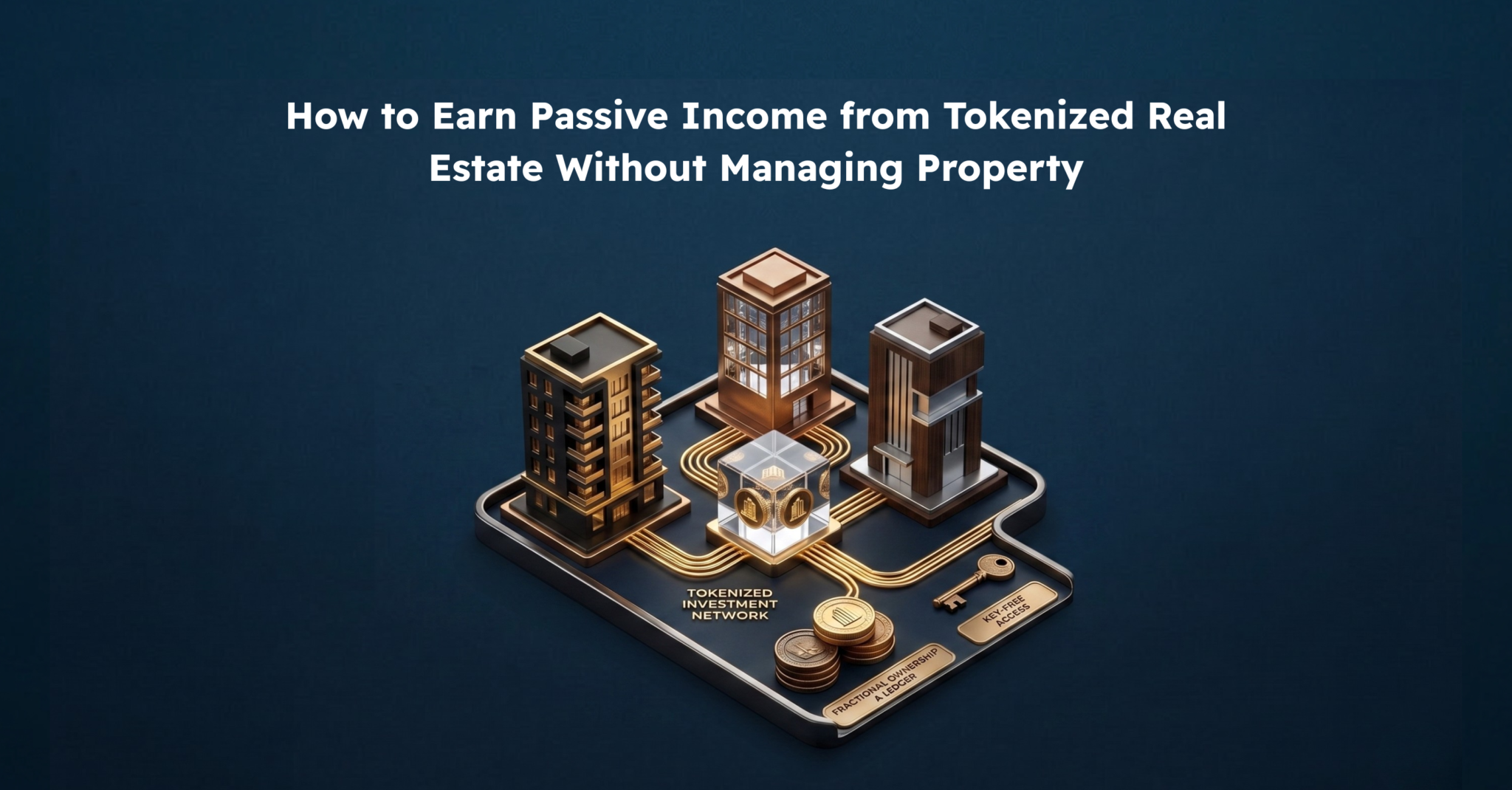
At its core, passive income from tokenized real estate comes from owning fractional shares in a property that generates income. These shares are represented by digital tokens, which are recorded on a blockchain.
Instead of buying an entire property, you invest in a portion of it. This allows multiple investors to share ownership and receive a proportion of the income generated.
The income typically comes from rental payments made by tenants. As the property generates revenue, that income is distributed among investors based on their share.
For someone with limited time, this model is particularly appealing. You are still benefiting from real estate income, but without being involved in the operational side of the investment.
How It Works Without Managing Property
One of the biggest advantages of passive income from tokenized real estate is that it removes the need for direct involvement.
In traditional property investment, responsibilities can include finding tenants, handling maintenance issues, managing payments, and dealing with legal requirements. These tasks can quickly become time-consuming.
With tokenized real estate, these responsibilities are handled by professional management teams or platform operators. Your role as an investor is focused on selecting opportunities and monitoring performance.
Once you invest, the process becomes largely automated. Rental income is collected, expenses are managed, and distributions are made to investors.
For a busy professional, this creates a true passive income experience. You are not trading time for income, which is often the biggest limitation in traditional property investment.
The Role of Platforms in Creating True Passive Income
To understand why passive income from tokenized real estate can genuinely be hands-off, it is important to look at the role platforms play behind the scenes.
In traditional property investment, the investor is often responsible for coordinating multiple moving parts. This includes sourcing the property, handling legal agreements, managing tenants, and overseeing maintenance. Even with a letting agent, there is usually still some level of involvement required.
Tokenized platforms streamline this entire process. They typically handle property sourcing, due diligence, legal structuring, and ongoing management. This means that by the time an investment is available, much of the complexity has already been addressed.
For investors, this shifts the focus away from operations and toward decision-making. Instead of spending time managing property, you are reviewing opportunities and allocating capital.
This is what makes passive income from tokenized real estate particularly suitable for busy professionals. The infrastructure is designed to remove friction and reduce the need for active involvement, allowing you to participate in property investment without disrupting your daily routine.
Why This Model Is Growing in 2026
Passive income from tokenized real estate is gaining attention as more investors look for efficient ways to generate income without increasing their workload.
One of the main drivers is accessibility. Tokenization allows investors to enter the real estate market with smaller amounts of capital, making it easier to get started.
Another factor is technology. Blockchain provides a transparent system for tracking ownership and transactions, which builds trust and simplifies the investment process.
There is also a shift in investor mindset. Many professionals are prioritising flexibility and time efficiency. Passive income from tokenized real estate aligns with this by offering exposure to property without the demands of active management.
As real-world assets become more integrated with digital platforms, this model is expected to continue growing.
How You Actually Earn Passive Income
Understanding how passive income from tokenized real estate is generated can help you set realistic expectations.
Rental Income Distribution
The most common source of income is rent. When tenants pay rent, that income is collected and distributed to investors after expenses.
Your share depends on how many tokens you own. The more tokens you hold, the larger your portion of the income.
Property Appreciation
In addition to rental income, properties may increase in value over time. While this is not immediate income, it contributes to overall returns.
If the property is sold or your tokens increase in value, you may benefit from capital gains.
Frequency of Payments
Depending on the platform, income may be distributed monthly, quarterly, or at other intervals. This can create a consistent income stream that fits well with financial planning.
For many investors, the combination of regular income and long-term growth makes passive income from tokenized real estate particularly attractive.
What a Realistic Passive Income Timeline Looks Like
One of the most important aspects of passive income from tokenized real estate is setting realistic expectations around timing.
Unlike some areas of crypto, where returns can be immediate and volatile, real estate tends to operate on a more gradual timeline. Rental income is usually distributed on a monthly or quarterly basis, depending on the platform and the property.
In the early stages of an investment, returns may appear modest. This is normal. Over time, as income accumulates and properties potentially increase in value, the overall return becomes more meaningful.
For a busy professional, this slower, more consistent approach can actually be an advantage. It creates a predictable income stream that can complement other earnings rather than requiring constant attention.
Understanding this timeline helps prevent unrealistic expectations and allows you to approach passive income from tokenized real estate with a more strategic mindset.
What to Look for Before You Invest
Not all opportunities offering passive income from tokenized real estate are equal. Evaluating key factors can help you make better decisions.
Property Quality
The performance of your investment depends on the underlying asset. Look for properties in strong locations with consistent demand.
Expected Returns vs Risk
Higher returns often come with higher risk. It is important to understand how returns are generated and whether they are sustainable.
Platform Transparency
Choose platforms that provide clear information about properties, fees, and performance. Transparency reduces uncertainty and helps you make informed decisions.
Management Structure
Since you are not managing the property yourself, it is important to understand who is responsible for operations. Strong management can significantly impact performance.
Where Osool Gamma Fits In
As passive income from tokenized real estate becomes more popular, platforms are evolving to make the process more accessible and structured.
Osool Gamma is designed to simplify access to tokenized real estate while focusing on real, income-generating properties. It provides a way for investors to participate in property ownership without taking on the responsibilities of direct management.
The platform offers curated opportunities, allowing users to review property details, understand projected income, and invest with clarity. For busy professionals, this creates a streamlined experience where investment decisions can be made efficiently.
By combining digital access with real-world assets, Osool Gamma supports a more practical approach to generating passive income from tokenized real estate.
Common Mistakes to Avoid
Even with a hands-off approach, there are still mistakes to avoid.
One common issue is investing without fully understanding the property. Another is expecting immediate high returns without considering market conditions.
It is also important to avoid over-investing in a single property. Diversification can help reduce risk and create a more stable income stream.
Taking time to understand each opportunity can make a significant difference in long-term results.
Building a Simple Passive Income Strategy
For busy professionals, simplicity is key. A complicated strategy can become difficult to maintain.
Start with a small allocation and focus on properties that generate stable income. Over time, you can expand your portfolio by adding more investments.
Diversification across different properties can help balance performance and reduce risk. This approach creates a more consistent income stream.
It is also important to think long-term. Passive income from tokenized real estate is not about quick gains, but about building steady returns over time.
You can start investing now from the Osool Gamma Investment Platform
Passive income from tokenized real estate offers a practical solution for professionals who want to generate income without taking on additional responsibilities.
By removing the need for direct management and lowering the barrier to entry, it makes real estate more accessible and aligned with modern lifestyles.
With the right approach, it can become a valuable part of a broader financial strategy, providing both income and long-term growth potential.
FAQ
What is passive income from tokenized real estate?
It is income earned by investing in fractional shares of property through digital tokens, with returns typically coming from rental income.
Do I need to manage the property?
No, property management is handled by professionals or the platform, making it a hands-off investment.
How much can I earn?
Returns vary depending on the property, but many investments offer regular income along with potential long-term growth.
Is this suitable for beginners?
Yes, especially for those looking for a simple and accessible way to invest in real estate.
Is it safe?
Like any investment, there are risks. Choosing reputable platforms and diversifying your investments can help manage those risks.
References
- Harvard Business Review. How Blockchain Is Changing Finance and Real Estate (2022).
- KPMG. Tokenization of Assets: Opportunities in Real Estate Investment (2023).
- EY. Blockchain and the Future of Real Estate Transactions (2023).
- CBRE. Global Real Estate Market Outlook (2024).
- JLL. Digital Transformation in Real Estate Investment (2024).
- Cointelegraph. Real-World Assets and Tokenization Trends (2024).
- The Block. Institutional Adoption of Tokenized Assets (2024).
- Statista. Real Estate Investment and Tokenization Statistics (2024–2026).