

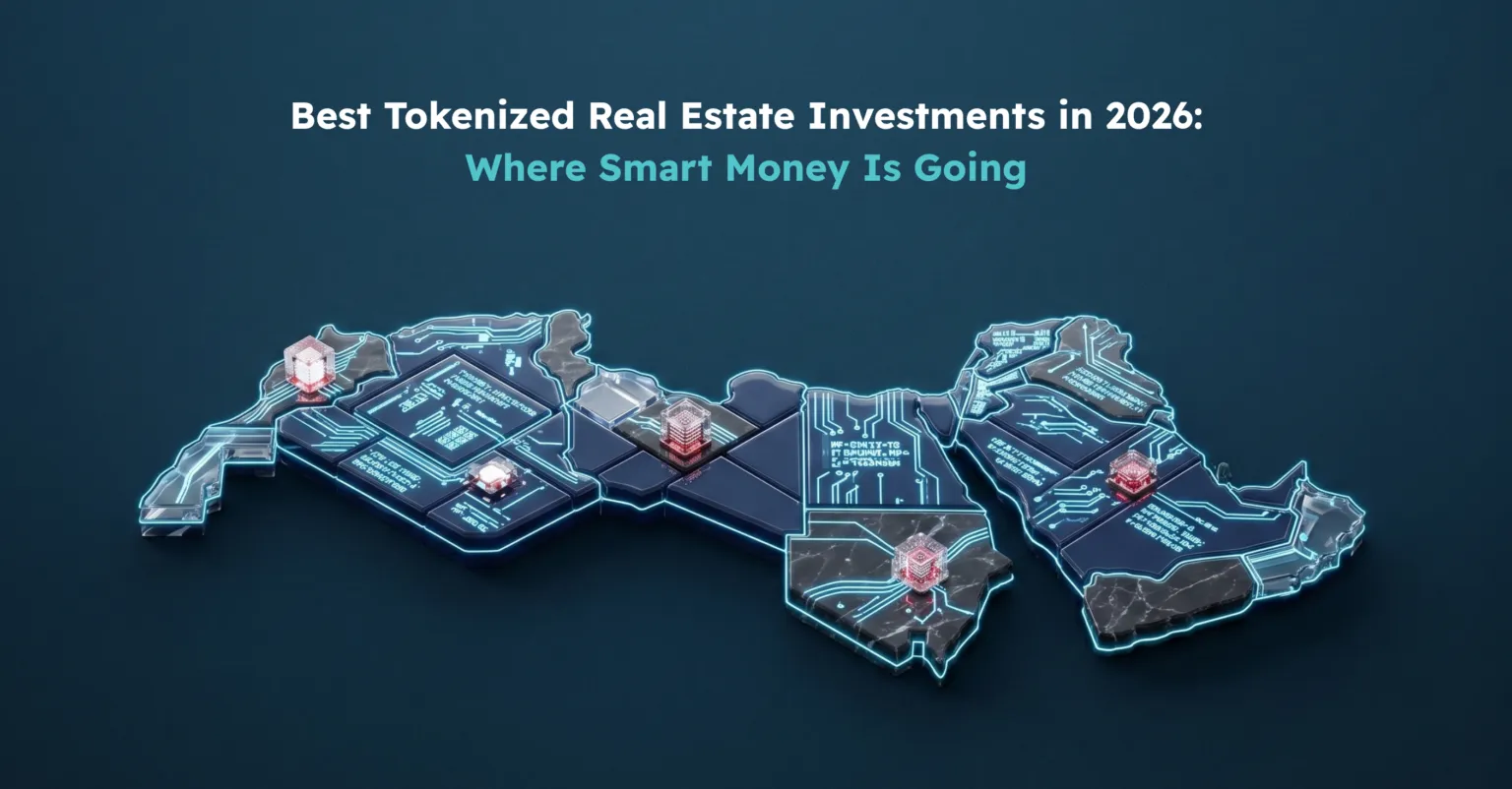
Real estate investment across the MENA region has always attracted attention, but access has often been limited by high capital requirements and complex ownership structures. Today, that is beginning to change. Tokenization is opening the door to a new way of investing, allowing investors to access property markets across multiple countries without the traditional barriers.
Tokenized property opportunities in the MENA region are becoming increasingly relevant for investors who want exposure to high-growth markets while maintaining flexibility. Instead of committing to a single property or location, investors can now explore a range of opportunities across different countries, asset types, and risk profiles.
For regional investors, this shift is particularly important. It allows for easier comparison between markets, better diversification, and more informed decision-making. However, not all markets in the region offer the same level of opportunity, stability, or growth potential.
This guide explores tokenized property opportunities in the MENA region, highlighting where the strongest markets are emerging, how to evaluate them, and what to consider before investing.
You can start investing now from the Osool Gamma Investment Platform
What Are Tokenized Property Opportunities in the MENA Region?
Tokenized property opportunities in the MENA region refer to real estate investments that are divided into digital shares, or tokens, and made available to investors through blockchain-based platforms.
Each token represents a portion of ownership in a property. This allows multiple investors to participate in a single asset, reducing the need for large upfront capital.
In practice, tokenized property opportunities in the MENA region can include residential developments, commercial buildings, hospitality projects, and mixed-use properties across different countries.
For investors, this creates a more flexible approach. Instead of being tied to one market, you can allocate capital across multiple regions and property types, depending on your strategy.
Why the MENA Region Is Gaining Attention
The MENA region is experiencing significant economic and structural changes, making it an attractive area for real estate investment.
Several countries are investing heavily in infrastructure, tourism, and urban development. Governments are also introducing reforms to attract foreign investment and modernise financial systems.
Tokenized property opportunities in the MENA region align with these trends. They provide a way to access growing markets while benefiting from digital investment models.
There is also a demographic factor. A young and growing population is increasing demand for housing, commercial spaces, and new developments.
For investors, this combination of growth, reform, and demand creates a strong foundation for long-term opportunities.
How Tokenization Is Changing Cross-Border Investing
One of the most important aspects of tokenized property opportunities in the MENA region is how they simplify cross-border investment.
Traditionally, investing in property across different countries involves legal complexity, currency considerations, and administrative barriers. Each market has its own regulations, ownership rules, and processes, which can make it difficult for investors to diversify beyond their home country.
Tokenization helps reduce many of these challenges by standardising how investments are accessed. Through digital platforms, investors can explore tokenized property opportunities in the MENA region without needing to navigate each country’s system individually.
This creates a more seamless experience. Instead of setting up separate structures in multiple markets, investors can access a range of opportunities through a single platform. Ownership is recorded digitally, and transactions are managed within the platform’s framework.
For regional investors, this is a significant shift. It allows for greater flexibility and opens up markets that may have previously felt inaccessible.
Key Markets to Watch
Understanding tokenized property opportunities in the MENA region requires looking at individual countries and what they offer.
Saudi Arabia
Saudi Arabia is one of the most dynamic markets in the region. With large-scale developments under Vision 2030, including projects in Riyadh and NEOM, the country is attracting both local and international interest.
Tokenized property opportunities in the MENA region are particularly strong here due to ongoing infrastructure investment and increasing demand for residential and commercial space.
United Arab Emirates
The UAE, particularly Dubai and Abu Dhabi, has long been a hub for real estate investment. It offers a mature market, strong regulatory frameworks, and high levels of international participation.
Tokenized property opportunities in the UAE within the MENA region often focus on premium developments and income-generating properties.
Egypt
Egypt is emerging as a high-growth market, driven by population growth and urban expansion. While it may carry a higher risk, it also offers significant potential for long-term returns.
Tokenized property opportunities in the MENA region in Egypt often appeal to investors seeking growth rather than immediate income.
Qatar
Qatar’s real estate market is supported by strong infrastructure and ongoing development following major global events. It offers a stable environment with selective opportunities.
Comparing Growth Potential Across the Region
Not all tokenized property opportunities in the MENA region offer the same growth profile.
Saudi Arabia and the UAE tend to provide a balance between growth and stability. These markets benefit from strong government backing and ongoing development.
Emerging markets like Egypt may offer higher growth potential but come with increased uncertainty. This creates a different risk-reward dynamic.
For investors, the key is understanding how each market fits into a broader strategy. Tokenized property opportunities in the MENA region allow you to combine different markets, balancing stability with growth.
Understanding Risk vs Return
Every investment involves trade-offs, and tokenized property opportunities in the MENA region are no different.
Stable markets often provide consistent income but lower growth potential. High-growth markets may offer greater returns but come with higher risk.
Liquidity is another factor. While tokenization can improve accessibility, it does not always guarantee immediate exit options.
Platform quality also plays a role. The reliability and transparency of the platform you choose can significantly impact your experience.
Approaching tokenized property opportunities in the MENA region with a clear understanding of these factors helps create a more balanced investment approach.
How to Evaluate Opportunities
Evaluating tokenized property opportunities in the MENA region requires looking beyond surface-level information.
Start by analysing the property itself. Location, demand, and long-term development plans all influence performance.
Next, consider the broader market. Economic stability, government policies, and infrastructure development can affect returns.
It is also important to review how the investment is structured. Understanding how income is generated and distributed is key.
Tokenized property opportunities in the MENA region should be evaluated as part of a wider portfolio strategy rather than in isolation.
Where Osool Gamma Fits In
As tokenized property opportunities in the MENA region continue to expand, platforms are evolving to provide more structured access.
Osool Gamma is designed to simplify access to tokenized real estate opportunities while focusing on real, income-generating properties within the region. It provides a platform where investors can explore curated opportunities across different markets.
For regional investors, this creates a more streamlined experience. Instead of navigating multiple systems, they can access a range of tokenized property opportunities in the MENA region through a single platform.
By combining local market insight with digital investment tools, Osool Gamma supports a more practical and informed approach.
Building a Regional Investment Strategy
One of the main advantages of tokenized property opportunities in the MENA region is the ability to diversify across countries.
Instead of focusing on a single market, investors can spread their capital across different regions, balancing risk and return.
For example, you might allocate a portion of your investment to stable markets like the UAE, while also exploring higher-growth opportunities in emerging markets.
Tokenized property opportunities in the MENA region make this level of diversification more accessible than traditional property investment.
Over time, this approach can create a more resilient portfolio.
Income vs Growth: Choosing the Right Opportunities
When exploring tokenized property opportunities in the MENA region, it is important to understand that not all investments are designed to deliver the same type of returns.
Some properties are focused on generating steady rental income. These are typically located in established markets with consistent demand, such as central areas in Dubai or Riyadh. They may offer more predictable returns, making them suitable for investors looking for stability.
Other opportunities are geared toward capital growth. These are often found in developing areas or emerging markets, where property values may increase over time. While these investments can offer higher returns, they may also come with greater uncertainty.
Tokenized property opportunities in the MENA region allow investors to combine both approaches. By allocating capital across income-generating and growth-focused assets, it is possible to create a more balanced portfolio.
Understanding this distinction helps investors align their choices with their financial goals, whether that is generating regular income, achieving long-term growth, or a combination of both.
You can start investing now from the Osool Gamma Investment Platform
Tokenized property opportunities in the MENA region are reshaping how investors approach real estate across multiple countries.
By lowering barriers to entry and enabling cross-border investment, they provide access to a wider range of markets and opportunities. At the same time, they require careful evaluation of risk, return, and market conditions.
For regional investors, this represents an opportunity to build a more diversified and flexible portfolio, aligned with both growth and stability.
As the market continues to evolve, tokenized property opportunities in the MENA region are likely to become an increasingly important part of modern investment strategies.
FAQ
What are tokenized property opportunities in the MENA region?
They are real estate investments that are divided into digital shares, allowing investors to own a fraction of properties across different countries in the region.
Which country offers the best opportunities?
It depends on your goals. Saudi Arabia and the UAE offer stability, while markets like Egypt may provide higher growth potential with increased risk.
Is it possible to invest across multiple countries?
Yes, tokenization allows investors to access properties in different markets, making diversification easier.
What are the main risks?
Risks include market fluctuations, liquidity limitations, and platform reliability. Understanding these factors is essential before investing.
Is this suitable for long-term investing?
Yes, many investors use tokenized property opportunities in the MENA region as part of a long-term strategy focused on income and growth.
References
- World Bank. MENA Economic Update and Real Estate Growth Trends (2024).
- International Monetary Fund. Regional Economic Outlook: Middle East and Central Asia (2024).
- Knight Frank. MENA Real Estate Market Review and Forecast (2024).
- JLL. Middle East Real Estate Market Dynamics (2024).
- PwC Middle East. Emerging Trends in Real Estate and Digital Assets in MENA (2023).
- Deloitte Middle East. Digital Transformation and Tokenization in Real Estate (2023).
Arab Monetary Fund. Fintech and Digital Investment Trends in the Arab Region (2023).