

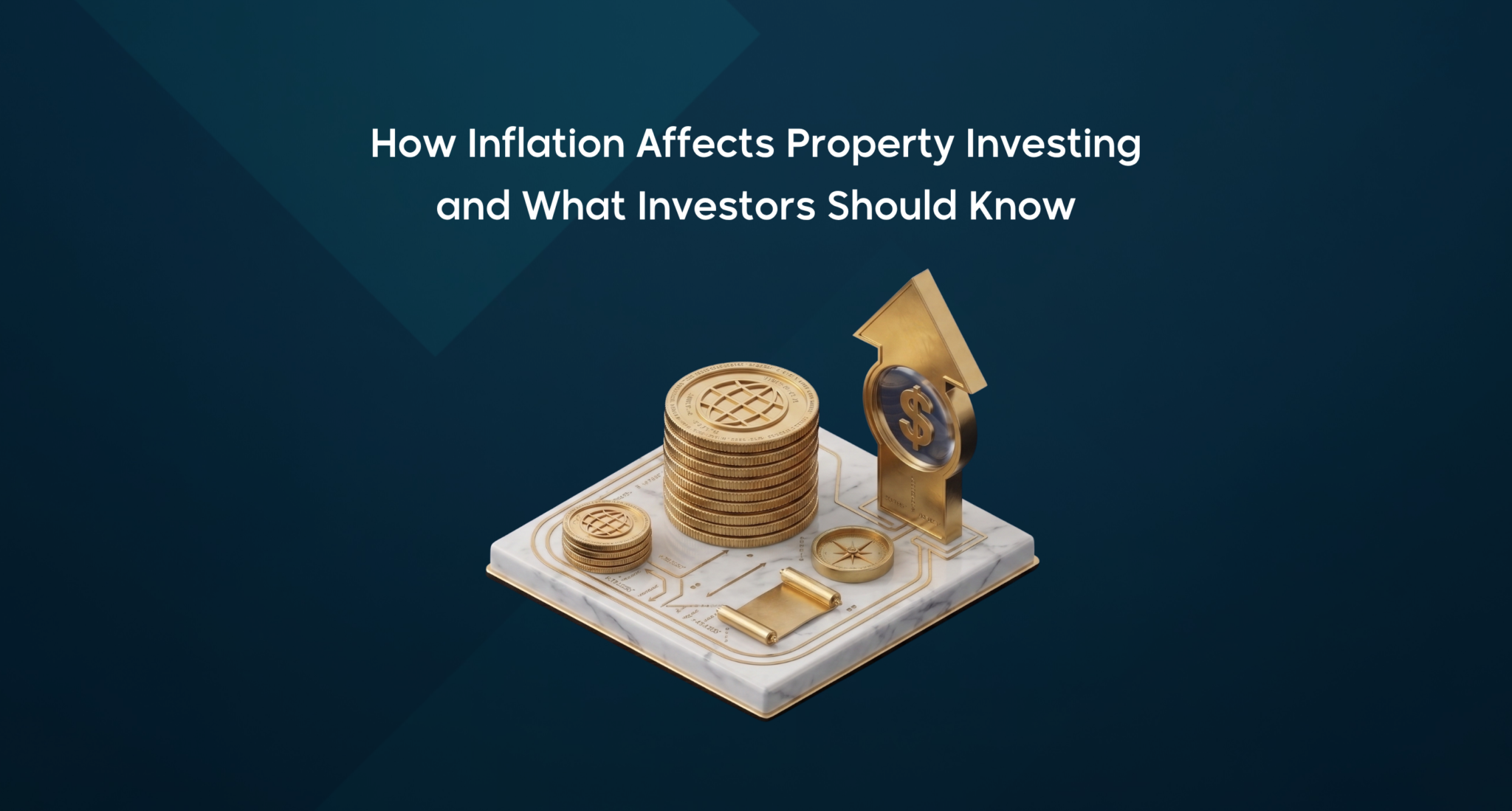
When considering inflation and property investment in Saudi Arabia, many investors start with a simple scenario: Imagine putting SAR 100,000 into a savings account and leaving it untouched for ten years. When you check your balance at the end of that decade, every single riyal is still there. On paper, nothing has changed. In reality, your wealth has shrunk.
The same SAR 100,000 will no longer buy the same home, cover the same living expenses, or provide the same financial security it once did because the purchasing power of uninvested cash steadily declines as prices rise. This erosion is driven by inflation, and it is the primary reason investors seek real estate assets rather than holding physical cash or low-yielding savings.
In reality, almost everything has.
The same SAR 100,000 may no longer buy the same home, cover the same living expenses, or provide the same financial security it once did. As the cost of goods, services, and housing increases over time, the purchasing power of your money gradually declines. This is the effect of inflation, and it’s one of the main reasons people choose to invest rather than leave their savings sitting in cash.
Understanding the relationship between inflation and property investing helps explain why real estate has remained a popular long-term investment for generations. While no investment is guaranteed to outperform inflation, property has characteristics that many investors believe can help preserve wealth over time. Knowing why that is, and understanding the factors that influence investment performance, allows investors to make decisions based on knowledge rather than uncertainty.
Why Inflation and Property Investing Matter to Long-Term Investors
Inflation is often discussed in economic reports and financial news, but its effects are far easier to recognise in everyday life. Groceries become more expensive, construction costs increase, and the price of buying or renting a home changes over time. Gradually, the same amount of money buys less than it once did.
This is why the relationship between inflation and property investing matters to anyone thinking about building long-term wealth. Investing isn’t only about growing your money. It’s also about protecting its purchasing power so that your savings continue working for you as prices rise.
Property has traditionally attracted long-term investors because it offers two potential sources of return. The first is rental income, which may increase over time as market conditions change. The second is capital appreciation, where the value of a property may grow over the long term. Neither outcome is guaranteed, but together they help explain why property continues to play an important role in many investment portfolios.
Of course, rental income is only valuable if you understand how to measure it. Our article What Is Rental Yield and Why Does It Matter to Property Investors? explains how rental yield is calculated and why it’s one of the most important figures investors consider when assessing a property’s income potential.
How Inflation and Property Investing Are Connected
When people hear that property can help protect against inflation, it’s easy to assume that property prices automatically rise whenever inflation increases. The relationship is far more complex than that.
The connection between inflation and property investing is influenced by many different factors. Inflation can increase construction costs, affect borrowing through changes in interest rates, influence housing demand, and alter the amount tenants are willing or able to pay in rent. All of these factors interact to shape the performance of the property market.
This is why experienced investors rarely base their decisions on inflation alone. Instead, they look at the broader picture, asking whether a particular investment has strong long-term fundamentals. A property in an area with growing demand, good infrastructure, and consistent rental demand is often viewed very differently from one in a weaker market, even if both are experiencing the same economic conditions.
Looking beyond economic headlines is only one part of making informed investment decisions. Our article The Most Important Property Investment Metrics Every Investor Should Know explores the key measurements investors use to compare opportunities with greater confidence and evaluate whether a property supports their long-term goals.
Why Inflation and Property Investing Don’t Affect Every Property Equally
One of the biggest mistakes investors can make is assuming that every property responds to inflation in the same way. While inflation influences the wider economy, individual properties are still affected by their own local circumstances.
A residential apartment in a growing community may experience very different demand from a commercial building in an area where businesses are struggling. Likewise, a property in a location with limited housing supply and a growing population may respond differently to changing economic conditions than one where demand has remained stagnant.
This is why successful inflation and property investing isn’t about predicting what inflation will do next. It’s about identifying quality investments that are supported by strong fundamentals regardless of short-term economic conditions. Investors who focus on location, rental demand, property quality, and long-term value are often better positioned than those who react to every new inflation report.
Rather than viewing inflation in isolation, experienced investors recognise that it’s only one piece of a much larger investment puzzle. The strongest decisions are usually made by combining an understanding of economic conditions with careful research and a long-term perspective.
How Inflation and Property Investment Influence Long-Term Decision Making
Once investors understand how inflation and property investing are connected, they often begin looking at opportunities through a different lens. Instead of asking whether a property is likely to perform well over the next year, they start considering how that investment could support their financial goals over the next ten or twenty years.
This shift in perspective is important because inflation is rarely a short-term event. It gradually changes the value of money over time, meaning investment decisions made today can have a significant impact on future purchasing power. Experienced investors recognise that while no one can predict exactly how inflation will behave, building a portfolio of carefully selected assets may provide greater resilience than leaving large amounts of money sitting idle.
That doesn’t mean every property is a good investment during periods of inflation. Investors still need to evaluate each opportunity on its own merits. Rental demand, property condition, location, and expected returns remain just as important as broader economic conditions. Inflation provides valuable context, but it should never become the only factor guiding an investment decision.
This is one reason successful investors avoid making decisions based solely on economic headlines. Instead, they focus on whether a property continues to support their long-term strategy, knowing that markets, interest rates, and inflation will all change throughout their investment journey.
If you’d like to understand more about how inflation affects purchasing power and long-term economic growth, the World Bank’s resources on macroeconomics provide additional context for many of the concepts discussed in this article.
How Fractional Property Ownership Fits Into Inflation and Property Investing
One of the challenges many investors face during periods of inflation is finding ways to put their money to work without needing enough capital to purchase an entire investment property. As property prices rise, saving for a substantial deposit can take longer, making it more difficult for some investors to enter the market when they’re ready to begin investing.
Fractional property ownership offers an alternative approach. Rather than purchasing an entire property, investors own a share of an income-generating asset, allowing them to participate in the real estate market with a lower initial investment. For many people, this creates an opportunity to begin investing sooner while gradually building exposure to property as their financial position grows.
If you’re new to this approach, our article Understanding Fractional Property Ownership in Saudi Arabia explains how fractional ownership works and why it has become an increasingly popular way for investors to access income-generating real estate.
Another advantage of fractional ownership is flexibility. Instead of concentrating all of their available capital into a single property, investors may have the opportunity to spread their investments across different opportunities over time. While diversification doesn’t remove investment risk, it can help reduce reliance on the performance of one asset and create a more balanced investment approach.
At Osool Gamma, we believe understanding inflation and property investing is just as important as understanding the investment itself. That’s why we focus on making income-generating real estate more accessible while providing the educational resources investors need to make informed decisions. Rather than encouraging people to invest based on market headlines or short-term trends, we encourage them to understand the principles that underpin successful long-term investing.
Every investor’s journey is different, and there is no single strategy that suits everyone. By combining investor education with access to fractional property ownership, Osool Gamma helps investors build investment strategies that reflect their financial goals, available capital, and investment timeline. Where applicable, Osool Gamma’s offering is currently being tested within REGA’s Regulatory Sandbox, supporting the continued development of innovative investment solutions within Saudi Arabia’s evolving real estate sector.
Putting Inflation and Property Investment Into Perspective
Understanding inflation and property investing isn’t about trying to predict the next economic cycle or finding an investment that’s immune to changing market conditions. Inflation is a natural part of every economy, and successful investors recognise that building long-term wealth is usually about preparing for change rather than trying to avoid it.
Property has earned its place in many investment portfolios because it combines the potential for rental income with the possibility of long-term capital appreciation. Like any investment, it carries risks and should always be evaluated carefully, but approaching property with patience, research, and a well-defined strategy often leads to better decisions than reacting to short-term economic news.
Whether you’re making your first investment or expanding an existing portfolio, understanding the relationship between inflation and property investing can help you make decisions with greater confidence. The goal isn’t to outguess the market. It’s to build a strategy that continues supporting your financial goals, whatever the economic environment may bring.
Frequently Asked Questions
What Is the Relationship Between Inflation and Property Investing?
Inflation and property investing are closely connected because inflation affects purchasing power, rental prices, construction costs, and property values. While property doesn’t always outperform inflation, it has historically been viewed as an asset that may help preserve wealth over the long term.
Does Inflation Always Increase Property Prices?
No. Although inflation and property investing are linked, property prices are also influenced by interest rates, housing supply, local demand, employment levels, and broader economic conditions. Inflation is only one factor that affects the real estate market.
Why Do Investors Consider Property During Periods of Inflation?
Many investors consider inflation and property investing together because income-generating property has the potential to provide rental income and long-term capital growth. These characteristics may help support wealth preservation over time, although every investment should always be evaluated on its own merits.